

How to Choose Construction Fasteners: A Guide to Strength and Weather Resistance
Three steps to match strength, corrosivity and material
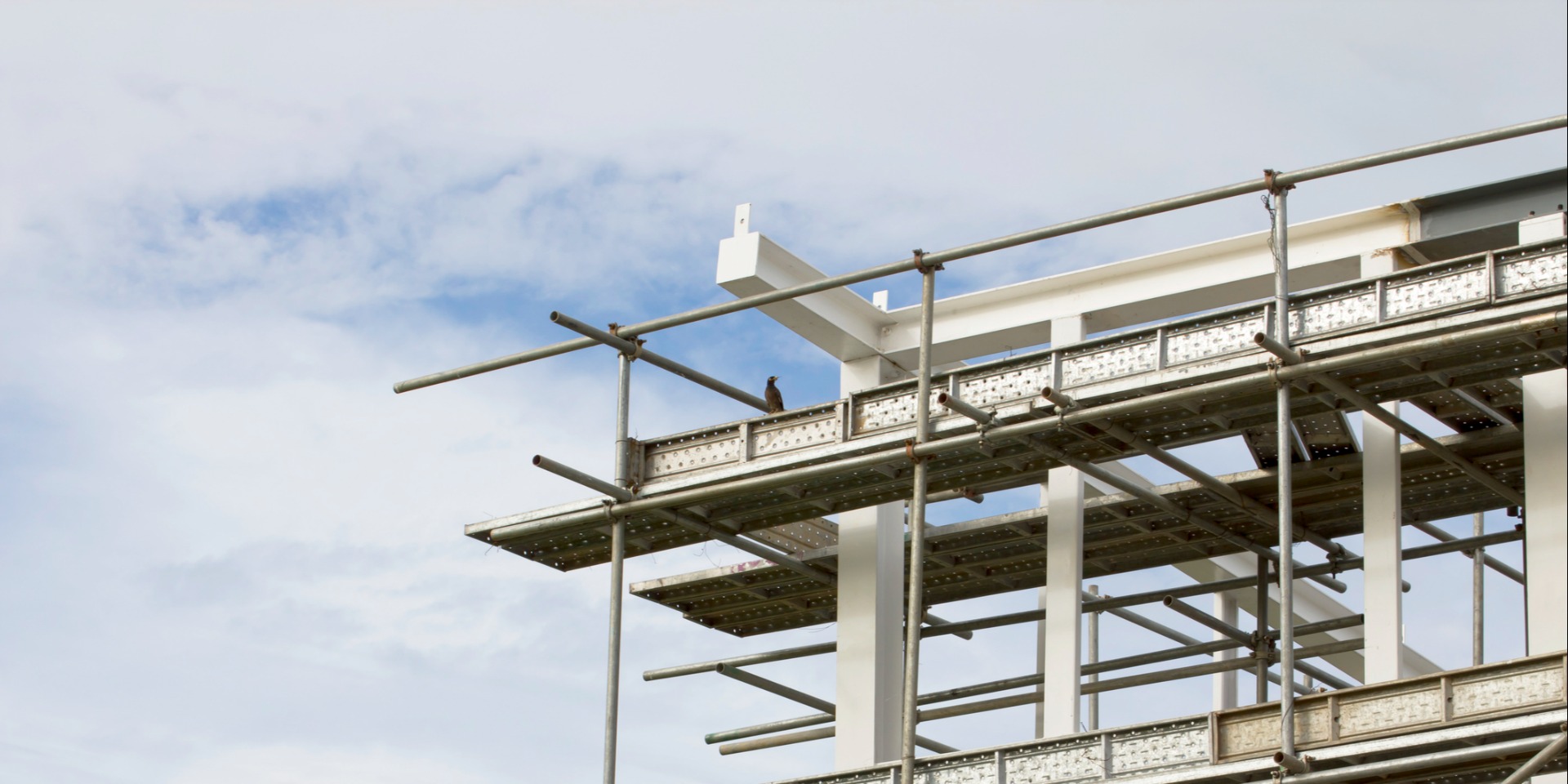
Choosing the right construction fasteners directly affects structural durability and safety. Fasteners must not only carry design loads but also maintain their performance through long-term exposure to moisture, temperature changes and salt. Confirm strength, service environment and material in that order to ensure long-term structural stability.
1. Fundamental Performance Requirements for Construction Fasteners
Construction fasteners carry tensile, shear and repeated vibration loads in applications such as steel structure connections, roofing panel fixing and facade bracket installation. A fastener without sufficient strength may deform, loosen or even fracture.
Beyond loads, construction fasteners are exposed to moisture, rain, temperature changes and UV radiation for years. Because installed fasteners are often difficult to inspect or replace, selection should be based on the full service life of the structure.
2. Selection Logic for Strength, Material and Weather Resistance
We recommend selecting construction fasteners in three steps:
Step 1: Confirm the required strength based on load
Identify the loads and preload the joint must carry, then choose the matching screw property class. For the differences between property classes, see What Really Defines Screw Grades? The Role of Heat Treatment in High-Strength Screws.
Step 2: Identify the corrosivity category of the environment
Determine whether the fastener will be used indoors or outdoors, and whether the site is near the coast or an industrial area. Section 3 explains how to identify the category.
Step 3: Choose the material and surface treatment
Based on the corrosivity category, choose coated carbon steel or stainless steel. For carbon steel coatings, see Zinc Plated or Dacromet Screws? For stainless steel, see Stainless Steel 304 vs. 316: A Professional Engineering Guide.
All three steps matter. Strength determines how much load a fastener can carry, while material and surface treatment determine how long that strength lasts.
3. Application Considerations Under Different Climate Conditions
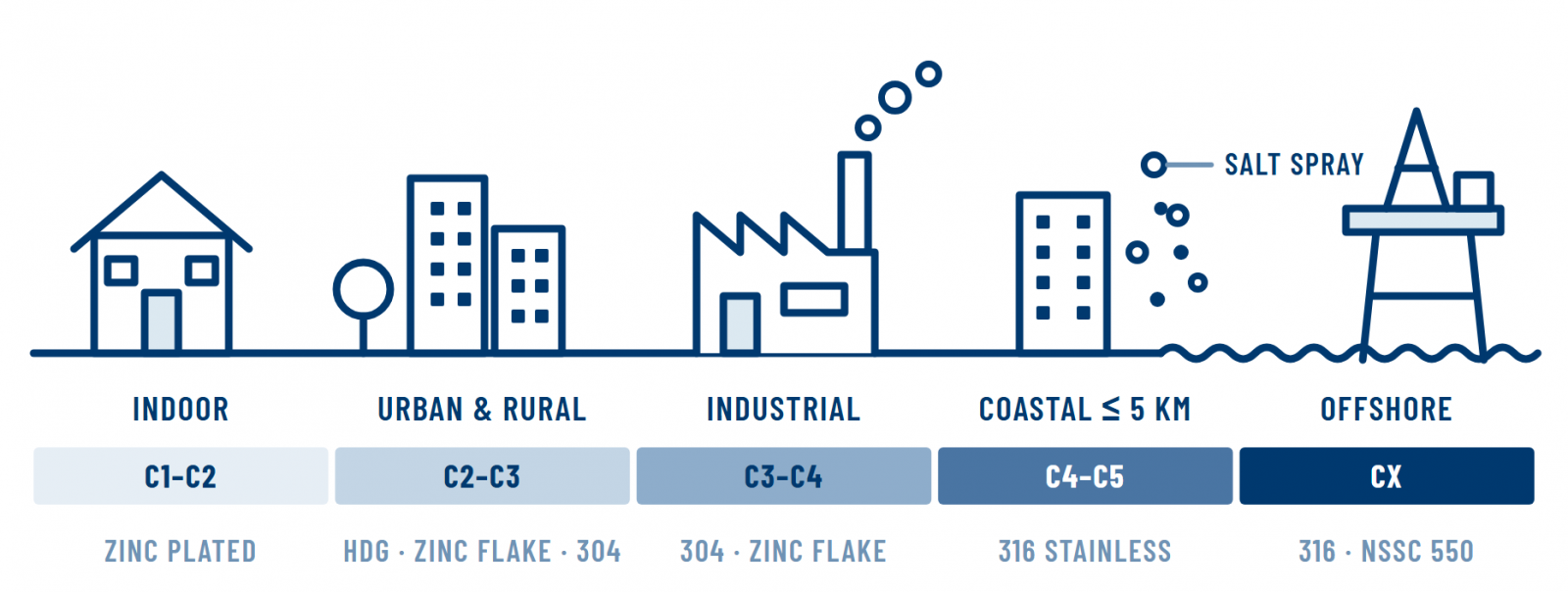
ISO 9223 classifies atmospheric corrosivity from C1 to C5 and CX. The higher the category, the faster metals corrode. Identify the corrosivity category of the site first, then match it with a suitable material.
| Environment | Corrosivity Category | Recommended Choice |
|---|---|---|
| Dry indoor | C1 to C2 | Zinc plated carbon steel screws |
| Urban and rural outdoor | C2 to C3 | Hot-dip galvanized, zinc flake or 304 stainless steel |
| Industrial areas | C3 to C4 | 304 stainless steel or high-performance zinc flake |
| Within 5 km of the coast, high salt spray | C4 to C5 | 316 stainless steel |
| Offshore and extreme environments | CX | 316 or high-corrosion-resistance materials such as NSSC 550 |
Beyond corrosivity, these climate factors also affect long-term fastener performance:
Heat, humidity and salt spray
Subtropical and tropical regions are highly humid, and coastal areas are often exposed to typhoon-driven salt spray. Outdoor fasteners in these regions face higher corrosion risk than in dry temperate climates and should be assessed against a higher corrosivity category.
Temperature changes and thermal expansion
Metal roofing and facade panels expand and contract with daily temperature changes, putting fasteners under repeated shear stress. For long-span roofs and facades, choose fasteners with good ductility and fatigue performance.
UV and sunlight
Non-metal components such as washers can degrade under long-term sun exposure and cause leaks. For roofs and facades, pair fasteners with weather-resistant EPDM washers.
4. Avoiding Common Selection Mistakes to Ensure Long-Term Safety
Focusing on strength and overlooking weather resistance
A screw with the right property class can still fail early if its coating does not suit the environment. A common example is using indoor-grade zinc plated screws on outdoor projects.
Mixing dissimilar metals
When two different metals are in contact with moisture present, galvanic corrosion occurs. For example, carbon steel screws fixing aluminum or stainless steel panels will corrode faster. Choose fasteners with an electrochemical potential close to the fixed material, such as stainless steel fasteners for aluminum panels, or separate them with insulating washers.
Judging coatings by salt spray hours alone
Salt spray testing is an important way to compare the corrosion resistance of different coatings, but more hours do not always mean a better fit. Choose the grade that matches the actual service environment to avoid over-specification and unnecessary cost. See How Is Salt Spray Testing Done for Screws?
Overlooking hydrogen embrittlement in high-strength screws
Electroplated high-strength screws require hydrogen relief baking, or a non-electrolytic coating should be used instead. See What Is Hydrogen Embrittlement in Screws?
With over 40 years in the fastener industry and AS9100D aerospace quality management certification, PATTA applies consistent quality standards from requirement review, inspection and testing to mass production and global delivery. If you have questions about selecting construction fasteners, our team is happy to assist.
👉 Contact us: https://www.patta.com/contact/
FAQ
Q1: Should I consider strength or weather resistance first when choosing construction fasteners?
A: Both matter. First confirm the required property class based on load, then choose the material and surface treatment based on the corrosivity category. Strength determines load capacity, and weather resistance determines how long that performance lasts.
Q2: Can screws and panels made of different metals be used together?
A: When moisture is present, contact between different metals causes galvanic corrosion. Choose materials with similar electrochemical potential, or separate them with insulating washers. For example, stainless steel fasteners are a better choice than carbon steel screws for fixing aluminum panels.
Q3: How do I identify the corrosivity category of a site?
A: Refer to ISO 9223. Dry indoor environments are generally C1 to C2, typical outdoor environments C2 to C3, and industrial areas C3 to C4. High salt spray environments within 5 km of the coast are C4 to C5, and offshore or extreme environments are CX.
Marketing
PATTA International
20 November 2026