

How Is Salt Spray Testing Done for Screws? A Complete Guide to Quality Inspection
Corrosion Resistance Testing Standards and Result Interpretation

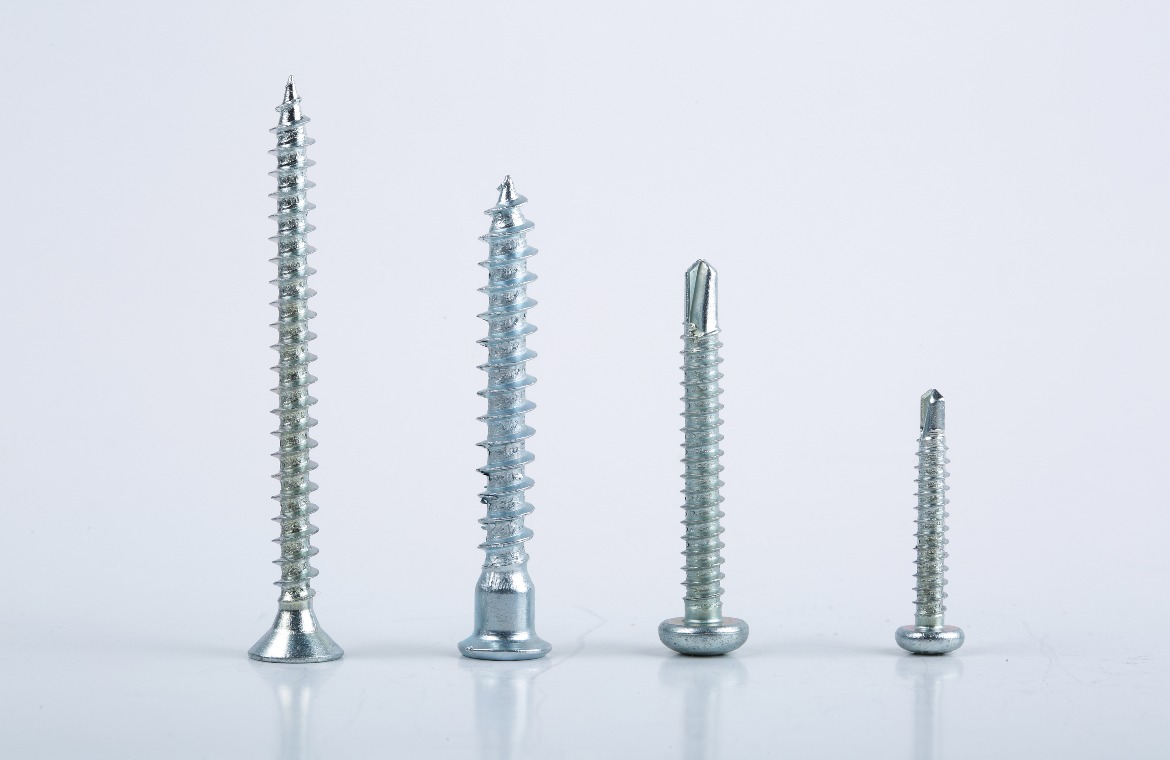
Salt spray testing is one of the most common methods the industry uses to evaluate the corrosion resistance of screws, rivets, and other fasteners used in construction, automotive manufacturing, and electronics.
By simulating long-term exposure to humid, salty environments in a short period of time, salt spray testing helps manufacturers select the right surface treatment and pass quality acceptance requirements.
This article breaks down the following essentials:
· The purpose and testing principles behind salt spray evaluation
· Common salt spray test types and how they differ
· How to interpret test duration and corrosion results
· The role of salt spray testing in fastener quality management

I. Purpose and Testing Principles of Salt Spray Evaluation
Salt spray testing uses accelerated corrosion in a lab setting to predict a screw's long-term rust resistance. A sodium chloride (NaCl) solution is atomized and continuously sprayed onto screws inside a sealed test chamber, while temperature (around 35°C), salt concentration (5% NaCl), and spray pressure are precisely controlled.
This accelerates the oxidation reaction on the metal surface, allowing manufacturers to reproduce months or even years of real-world corrosion within tens to hundreds of hours — providing a fast, reliable basis for surface treatment selection and quality acceptance.
II. Common Salt Spray Test Types and Differences
Based on the test solution and severity level, salt spray testing is mainly divided into the following types:
· Neutral Salt Spray (NSS): A neutral (pH 6.5–7.2) 5% NaCl solution. The most basic and widely applied method, corresponding to ASTM B117 and ISO 9227 (NSS).
· Acetic Acid Salt Spray (AASS): Acetic acid adjusts the pH to 3.1–3.3, corroding faster than NSS. Commonly used to test decorative coatings such as chrome and nickel plating.
· Copper-Accelerated Acetic Acid Salt Spray (CASS): Adds copper chloride for the fastest corrosion rate. Mainly used to evaluate anodized aluminum parts or highly decorative surfaces.
· Cyclic Corrosion Test (CCT): Combines salt spray, drying, and humidity phases in a cycle, more closely simulating real outdoor climate. Increasingly adopted by the automotive industry.
Installation note: standards such as ASTM B117, ISO 9227, JIS Z 2371, and DIN 50021 are broadly similar in conditions, but acceptance testing should always follow the specific standard designated in the contract to avoid disputes over test methodology.
III. Test Duration and Corrosion Result Interpretation
Interpreting results centers on two questions: how long until corrosion appears, and what form and extent that corrosion takes.
· White Rust: Early-stage oxidation of the zinc coating — the protective layer starts to degrade, but the base material is unaffected.
· Red Rust: The base material itself begins to rust, meaning the coating has failed. This is typically the key pass/fail indicator.
· Corrosion Area Ratio: Evaluated as a percentage of corroded surface area, used to determine whether it exceeds the acceptance threshold.
| Test Duration | Typical Surface Treatment | Suitable Applications |
| 24–72 hours | Standard zinc plating | Indoor use — furniture, internal electronic components |
| 72–96 hours | Standard zinc plating (higher grade) | General construction, home renovation, basic indoor/outdoor use |
| 200–300 hours | Enhanced zinc or alloy coatings | Moderately humid or occasionally outdoor-exposed settings — balconies, eaves, general machinery |
| 500+ hours | Dacromet or zinc-nickel alloy | Coastal areas, high humidity, automotive chassis, long-term outdoor exposure |
A longer duration isn’t automatically “better” — the treatment level should match the actual application environment to avoid unnecessary cost from over-specification.
IV. The Role of Salt Spray Testing in Fastener Quality Management
Salt spray testing does not exist in isolation — it is one component of a fastener’s overall quality management system, typically performed alongside the following inspection items:
· Dimensional inspection: confirms thread specifications, length, and head type meet drawing tolerances
· Hardness testing: verifies post-heat-treatment hardness meets requirements
· Torque and tensile testing: confirms clamping force and tensile strength
· Coating thickness inspection: ensures even, standard-compliant surface treatment
· Hydrogen embrittlement testing: checks high-strength screws for embrittlement risk
Salt spray data is an important reference for buyers evaluating a supplier’s corrosion resistance and comparing surface treatment options, and it is an essential part of product spec sheets and inspection reports. Incorporating it into routine QC processes — such as batch sampling and new-process validation — reduces post-sale rust complaints and recall risk while building long-term customer trust.
V. Get a Professional Fastener Solution
If you’re looking for a fastener supplier with complete salt spray testing and quality inspection capabilities, contact the PATTA team for professional selection advice and the most reliable fastening solution for your project.
Marketing
PATTA International
24 July 2026