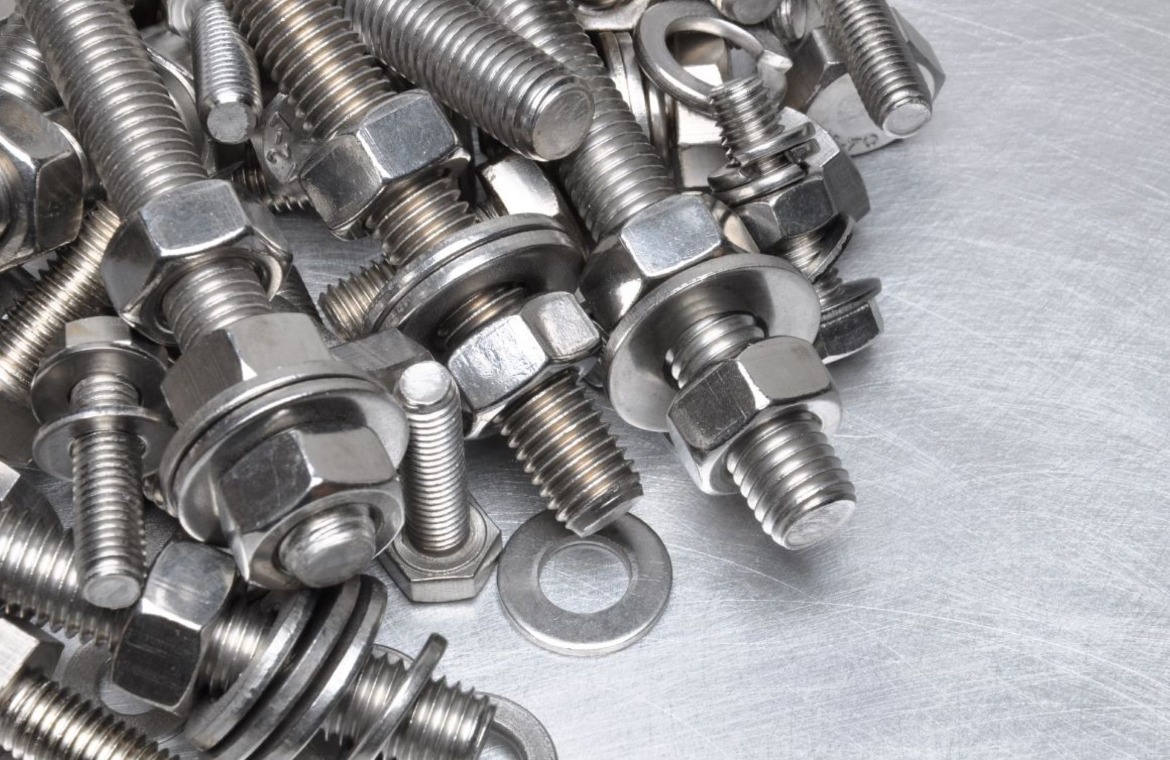


In structural engineering and industrial settings, selecting the wrong stainless steel grade leads to premature component failure. Pitting corrosion, bolt loosening from wear — both trace back to strength and corrosion resistance falling short together. NSSC 550 was engineered to solve this.
I. Material Design and Technical Background
Developed by Nippon Steel Nisshin, NSSC 550 is a high-strength corrosion-resistant stainless steel — fundamentally different from conventional austenitic grades.
Grades 304 and 316 rely on high nickel content for stability, capping hardness at 200–250 HV. NSSC 550 uses precipitation hardening: controlled heat treatment forms strengthening precipitates from trace elements such as copper, achieving 350–550 HV without increasing cross-section.
Three mechanisms reinforce corrosion resistance:
· High chromium content: Ensures passive film formation and repassivation.
· Molybdenum (Mo): Stabilizes the passive film in chloride environments; PREN ≥30, above 316’s 23–28.
· Low-carbon specification: Minimizes sensitization in heat-affected zones, preserving post-weld corrosion integrity.
II. Corrosion Resistance and Hardness: Key Differences
| 304 SS | 316 SS | NSSC 550 | |
| Hardness (HV) | 200–220 | 220–250 | 350–550 |
| Tensile Strength (MPa) | 520–620 | 580–700 | 800–1,100 |
| PREN | 18–20 | 23–28 | ≥30 |
| Chloride Resistance | Low | Moderate | Excellent |
| Wear Resistance | Low | Low–Moderate | High |
Hardness: Above 400 HV, NSSC 550 resists wear-induced failure at contact surfaces under repeated assembly or high-frequency vibration.
PREN: PREN ≥24 qualifies for coastal use; PREN ≥30 maintains passive film integrity under industrial salt spray and high-temperature halide conditions.
III. Engineering Value Under Combined Strength and Corrosion Demands
NSSC 550 eliminates the trade-off between strength and corrosion resistance.
· Replacing coated carbon steel: Once a coating fails, galvanic effects accelerate base metal corrosion. NSSC 550’s intrinsic resistance eliminates this failure mode entirely.
· Life Cycle Cost (LCC): Higher upfront cost than 304/316, but in applications where replacement difficulty and downtime costs far outweigh material price differences, LCC advantages typically emerge within 3–5 years.
· Lightweighting: Greater strength allows smaller fastener cross-sections under equivalent loads — reducing material volume without compromising safety factors, a direct design benefit for weight-sensitive equipment.
IV. Target Applications for NSSC 550
· Marine and offshore: Hull fasteners, port structures, offshore wind foundations — a direct upgrade from 316 in high-salinity environments.
· Petrochemical and process industries: Flange bolting and pressure vessel fasteners in sulfur- or halogen-containing media, resisting both stress corrosion cracking and mechanical fatigue.
· Precision machinery: Guide pins, sliders, high-cycle fixtures — intrinsic hardness reduces the need for hard chrome plating or nitriding.
· EV and new energy infrastructure: Outdoor components subject to thermal cycling and prolonged humidity exposure.
· Semiconductor and high-purity equipment: Superior passive film stability over standard 316 in process chemical environments.
Selection guideline: When an application combines corrosive media with high mechanical loading or frequent wear, NSSC 550 delivers greater overall value than upgrading to 316 and should be the primary candidate for evaluation.
V. Start with a Professional Assessment
For material selection consulting or NSSC 550 fastener specifications and supply conditions, contact the PATTA team.